

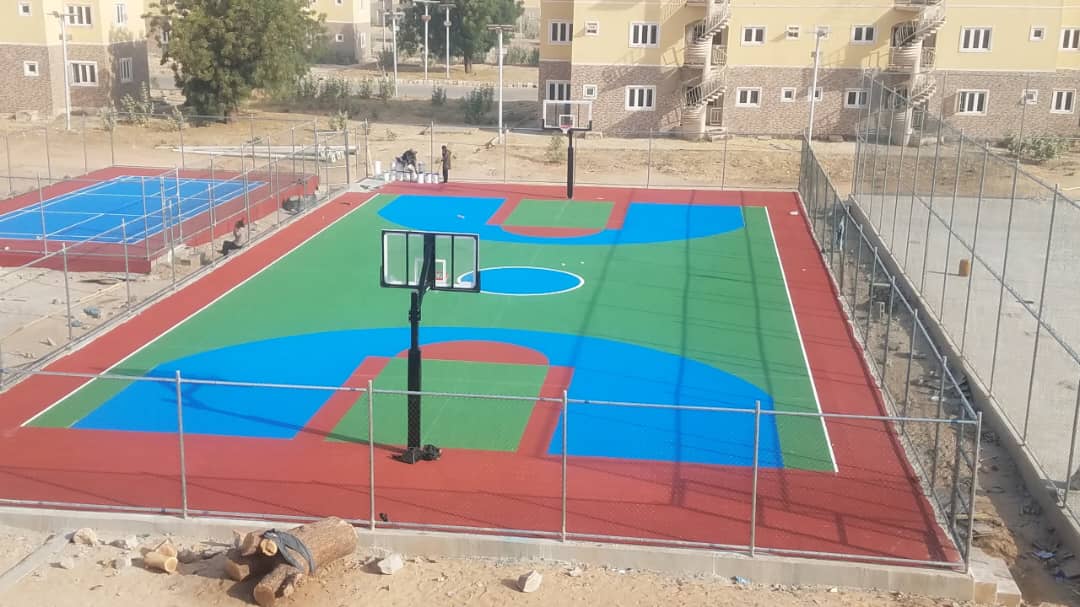
- By Sporthill International
- May 8, 2026
- 0 Comment
7 Things to Consider Before Constructing a Basketball Court in Nigeria
7 Things to Consider Before Constructing a Basketball Court in Nigeria
Basketball is rapidly gaining popularity across Nigeria, especially among schools, estates, private clubs, recreation centers, and sports academies. As more organizations invest in sports infrastructure, basketball courts are becoming essential components of modern recreational and athletic facilities.
However, constructing a basketball court involves much more than simply pouring concrete and installing hoops. A properly designed court requires careful planning, technical expertise, quality materials, and long-term maintenance considerations.
Whether you are a school administrator, real estate developer, investor, community leader, or private facility owner, understanding the key factors involved before construction begins can help you avoid costly mistakes and ensure your court delivers lasting value.
Here are seven important things to consider before constructing a basketball court in Nigeria.
1. Purpose of the Basketball Court
Before starting construction, the first thing to determine is the intended purpose of the court.
Different basketball facilities serve different functions, such as:
School sports activities
Professional training
Community recreation
Commercial rentals
Estate amenities
Tournaments and competitions
The intended purpose affects:
Court dimensions
Surface materials
Lighting requirements
Seating capacity
Fencing systems
Budget allocation
For example:
A recreational estate court may require a simpler setup.
A professional training court requires higher-quality flooring and standard dimensions.
A school court may need multi-purpose functionality for volleyball and handball.
Clearly defining the purpose helps ensure the project aligns with both current needs and future expansion plans.
2. Available Space and Court Dimensions
Space planning is critical when constructing a basketball court.
The standard full basketball court dimensions recognized internationally are approximately:
28 meters long
15 meters wide
However, many facilities in Nigeria operate with:
Half courts
Multi-purpose courts
Compact recreational courts
Before construction begins, it is important to assess:
Total available land space
Accessibility
Surrounding structures
Spectator areas
Parking requirements
Future expansion opportunities
Urban areas like Lagos often face land constraints, making compact or multi-purpose court designs more practical.
Proper spacing also improves:
Player safety
Spectator comfort
Facility aesthetics
Operational efficiency
3. Surface Material and Flooring Type
The court surface is one of the most important decisions in basketball court construction.
The flooring directly affects:
Player safety
Ball bounce performance
Durability
Maintenance costs
User experience
Common basketball court surfaces in Nigeria include:
Concrete Courts
Concrete is one of the most affordable options and is commonly used for outdoor courts.
Advantages:
Lower construction cost
High durability
Easy maintenance
Disadvantages:
Harder impact on players’ joints
Surface cracks over time
Less professional playing experience
Acrylic Sports Flooring
Acrylic flooring is widely used for professional and semi-professional courts.
Advantages:
Better grip and player comfort
Weather resistance
Improved aesthetics
Enhanced performance
Disadvantages:
Higher installation cost
Requires professional application
Modular Sports Tiles
Interlocking sports tiles are becoming increasingly popular for modern recreational courts.
Advantages:
Fast installation
Shock absorption
Attractive appearance
Easy replacement
Disadvantages:
Higher upfront investment
Requires proper drainage underneath
Choosing the right flooring depends on:
Budget
Usage frequency
Climate conditions
Desired playing standard
4. Drainage and Weather Conditions
Nigeria’s heavy rainfall can severely damage poorly constructed basketball courts.
One of the biggest mistakes facility owners make is neglecting proper drainage systems.
Without effective drainage:
Water accumulates on the court
Surfaces deteriorate faster
Cracks develop
Slippery conditions increase injury risks
A quality drainage system should include:
Proper surface slope
Water runoff channels
Perimeter drainage
Sub-base preparation
Outdoor courts especially require weather-resistant construction methods to withstand:
Rainfall
Heat
UV exposure
Surface expansion and contraction
Good drainage extends the lifespan of the court and reduces long-term maintenance costs significantly.
5. Lighting and Electrical Infrastructure
Lighting is often overlooked during the planning phase, yet it greatly impacts the functionality and commercial value of the facility.
Proper lighting allows:
Evening games
Extended facility usage
Tournaments and events
Commercial rentals after work hours
LED sports lighting is now commonly preferred because it:
Consumes less electricity
Provides brighter illumination
Requires less maintenance
Lasts longer
Some facilities are also adopting solar-powered lighting systems to reduce energy costs amid Nigeria’s rising electricity and fuel expenses.
Lighting installation should be carefully positioned to:
Reduce glare
Improve visibility
Ensure player safety
6. Budget and Long-Term Maintenance Costs
Many people focus only on initial construction expenses without considering ongoing maintenance.
A basketball court requires periodic:
Surface cleaning
Repainting
Crack repairs
Hoop maintenance
Fence repairs
Lighting maintenance
When planning a project, it is important to budget for both:
Construction costs
Operational and maintenance expenses
Choosing extremely cheap materials may reduce upfront costs but often leads to:
Faster deterioration
Frequent repairs
Higher long-term spending
A properly constructed court using quality materials can last many years with minimal maintenance.
It is often more cost-effective to invest in durability from the beginning.
7. Work with Experienced Sports Construction Professionals
Sports facility construction differs significantly from standard building construction.
A general contractor may not fully understand:
Court dimensions
Surface performance requirements
Sports drainage engineering
Safety specifications
Basketball court line markings
Working with experienced sports construction specialists helps ensure:
Proper planning
High-quality finishing
Compliance with standards
Long-term durability
Professional contractors can also help optimize budgets through:
Material recommendations
Efficient layouts
Multi-purpose court planning
Future expansion strategies
In addition, experienced sports construction firms can guide clients on:
Lighting systems
Spectator seating
Fencing
Branding opportunities
Revenue-generating facility designs
Bonus Consideration: Multi-Purpose Usage
To maximize return on investment, many basketball courts in Nigeria are now designed as multi-purpose sports courts.
A single court can accommodate:
Basketball
Volleyball
Badminton
Handball
Fitness sessions
This approach:
Saves land space
Reduces construction costs
Increases facility usage
Generates more revenue opportunities
Multi-purpose designs are especially useful for:
Schools
Estates
Community centers
Recreation clubs
The Growing Demand for Basketball Courts in Nigeria
Basketball continues to expand rapidly across Nigeria due to:
Youth participation
School competitions
Recreational sports culture
Fitness trends
Estate development projects
Modern estates, schools, and recreational hubs increasingly view sports facilities as valuable infrastructure investments.
Basketball courts are now being integrated into:
Residential estates
Hotels
Schools
Mixed-use developments
Youth centers
Corporate recreation facilities
As interest in sports and wellness continues to grow, demand for professionally built courts is expected to increase significantly.
Conclusion
Constructing a basketball court in Nigeria requires strategic planning, technical expertise, and long-term thinking.
From selecting the right flooring materials to ensuring proper drainage and lighting, every decision affects the durability, safety, functionality, and profitability of the facility.
Whether the goal is recreation, sports development, or commercial income generation, investing in proper planning from the beginning helps avoid costly mistakes and ensures long-term value.
As sports infrastructure development continues to expand across Nigeria, professionally designed basketball courts will remain important assets for schools, communities, estates, and private investors seeking to promote fitness, recreation, and youth development.
“Contact Sporthill International for facilities construction.”
Ogunniyi Adeleke