

- By Sporthill International
- May 8, 2026
- 0 Comment
How Schools Can Build Modern Sports Facilities on a Budget
How Schools Can Build Modern Sports Facilities on a Budget
In today’s educational environment, sports facilities are no longer considered a luxury for schools. They are an essential part of student development, physical fitness, talent discovery, and community engagement. Across Nigeria and many parts of Africa, schools are increasingly recognizing the importance of investing in modern sports infrastructure to remain competitive, attract parents, improve student wellness, and create opportunities for young athletes.
However, one major challenge many schools face is cost. Building a standard football pitch, basketball court, athletics track, or multi-purpose sports complex can appear financially overwhelming, especially for small and medium-sized schools operating within tight budgets.
The good news is that modern sports facilities can still be developed strategically and affordably without compromising quality. With proper planning, phased execution, smart material choices, and expert guidance, schools can create functional and attractive sports environments that serve students for many years.
This article explores practical ways schools can build modern sports facilities on a budget while maximizing long-term value.
Why Sports Facilities Matter in Schools
Sports facilities contribute significantly to both academic and non-academic development. A well-designed sports environment helps students build teamwork, discipline, leadership skills, confidence, and healthy lifestyles.
Modern sports facilities also help schools:
- Attract more student admissions
- Improve school reputation and branding
- Host competitions and inter-school tournaments
- Encourage talent development
- Promote student fitness and mental wellness
- Generate additional revenue through rentals and events
In many cases, parents now compare schools not only based on academics but also based on extracurricular opportunities and campus infrastructure.
Start with a Master Plan
One of the biggest mistakes schools make is attempting to build everything at once without a proper development strategy. This often leads to abandoned projects, poor construction quality, or budget overruns.
Instead, schools should begin with a sports facility master plan.
A master plan outlines:
- Available land space
- Priority sports
- Student population needs
- Budget estimates
- Future expansion opportunities
- Drainage and infrastructure requirements
For example, a school may begin with:
- A multi-purpose court
- Basic football field leveling
- Outdoor fitness areas
Then later expand into:
- Spectator stands
- Athletics tracks
- Indoor sports halls
- Synthetic turf installations
- Floodlights
Phased development helps schools spread costs over time while still making visible progress.
Build Multi-Purpose Sports Facilities
To reduce costs, schools should focus on multi-functional spaces instead of constructing separate facilities for every sport.
For example:
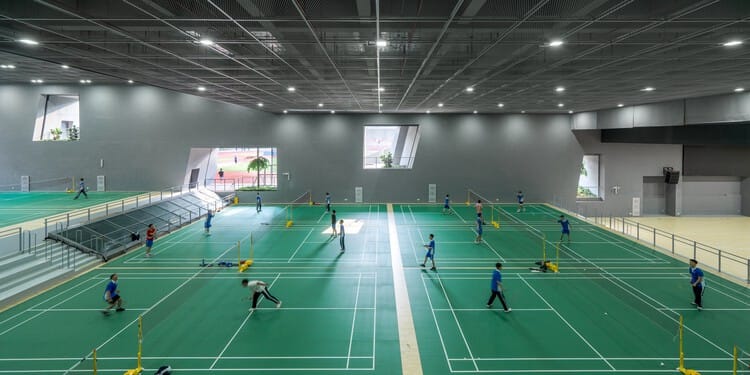
- One court can support basketball, volleyball, badminton, and handball.
- Open fields can accommodate football, athletics training, and school events.
- Mini sports arenas can host multiple activities and assemblies.
This approach saves:
- Construction costs
- Land usage
- Maintenance expenses
- Equipment investments
Multi-purpose designs are especially valuable for urban schools with limited land space.
Prioritize Durable and Low-Maintenance Materials
Choosing the right materials can significantly reduce long-term maintenance costs.
Some schools focus only on the cheapest construction options initially, but this often results in frequent repairs and higher expenses later.
Instead, schools should prioritize durable materials such as:
- Acrylic sports flooring
- Quality synthetic turf
- Reinforced concrete surfaces
- Weather-resistant goal posts and fencing
- Proper drainage systems
For example, artificial turf may require higher upfront investment compared to natural grass, but it reduces:
- Water usage
- Lawn maintenance
- Frequent repairs
- Grass replacement costs
Over several years, synthetic turf can become more economical for schools with high student activity.
Focus on Proper Drainage from the Beginning
Drainage is one of the most overlooked aspects of sports construction in Africa.
Poor drainage causes:
- Waterlogging
- Damaged playing surfaces
- Soil erosion
- Unsafe playing conditions
- Faster deterioration of facilities
Schools operating on a budget cannot afford repeated repairs caused by poor water management.
A properly designed drainage system ensures:
- Longer facility lifespan
- Reduced maintenance costs
- Better player safety
- All-season usability
Even a simple football field should include:
- Surface grading
- Perimeter drainage channels
- Water runoff systems
Investing in drainage early prevents larger expenses later.
Consider Phased Construction
Schools do not need to complete a world-class sports complex immediately.
A phased approach allows schools to build according to available funding.
Example of a Budget-Friendly Phased Plan
Phase 1
- Land clearing
- Site grading
- Basic football field
- Perimeter fencing
Phase 2
- Multi-purpose court
- Spectator seating
- Lighting installation
Phase 3
- Synthetic turf
- Athletics track
- Indoor gymnasium
This strategy allows schools to:
- Start using facilities earlier
- Attract sponsors
- Generate revenue from rentals
- Secure additional funding gradually
Seek Partnerships and Sponsorships
Many schools overlook partnership opportunities when planning sports infrastructure.
Potential partners include:
- Corporate organizations
- Sports brands
- Alumni associations
- Community leaders
- NGOs
- Government agencies
Companies often sponsor school sports projects in exchange for:
- Branding opportunities
- Community visibility
- CSR (Corporate Social Responsibility) impact
For example:
- A telecom company may sponsor a basketball court.
- A bank may support sports tournaments.
- Alumni groups may contribute to facility upgrades.
Schools can also organize fundraising events or sports campaigns to attract donations.
Use Local Materials and Skilled Local Contractors
Importing every material or hiring overly expensive foreign contractors can inflate budgets unnecessarily.
Where possible, schools should:
- Source materials locally
- Work with experienced local sports contractors
- Use regionally available construction solutions
Local expertise often provides:
- Lower transportation costs
- Faster project timelines
- Easier maintenance support
- Better understanding of local climate conditions
However, quality should never be compromised simply to reduce cost. Schools should always prioritize contractors with proven sports construction experience.
Invest in Lighting for Extended Usage
Lighting may seem secondary during construction planning, but it increases the value and functionality of sports facilities significantly.
With proper lighting:
- Evening training becomes possible
- Facilities can be rented after school hours
- Events and tournaments become easier to host
Schools can begin with energy-efficient LED floodlights to minimize electricity costs.
Solar-powered lighting solutions are also becoming increasingly popular in Africa due to rising fuel and power expenses.
Build Facilities That Generate Revenue
Sports facilities should not only be viewed as expenses. They can also become revenue-generating assets.
Schools can monetize facilities through:
- Weekend rentals
- Sports academies
- Community events
- Inter-school competitions
- Fitness programs
- Holiday camps
For example:
- Football pitches can be rented hourly.
- Basketball courts can host local leagues.
- Sports arenas can be used for events and ceremonies.
This additional income helps schools:
- Cover maintenance costs
- Fund future expansions
- Improve sustainability
Prioritize Safety and Accessibility
Budget-friendly construction should never compromise student safety.
Schools should ensure:
- Non-slip playing surfaces
- Safe fencing systems
- Proper emergency exits
- Protective padding where necessary
- Good ventilation for indoor facilities
Facilities should also be accessible to students of different age groups and abilities.
Safe facilities reduce injuries and improve user confidence.
Embrace Modern Sports Trends
Modern sports infrastructure is evolving rapidly, and schools should consider future trends during planning.
Some growing trends include:
- Mini football arenas
- Padel courts
- Smart scoreboards
- Solar-powered facilities
- Eco-friendly sports surfaces
- Digital booking systems
Schools that adopt modern concepts early often gain competitive advantages in branding and student attraction.
Work with Specialized Sports Construction Experts
Sports construction is different from regular building construction.
A contractor experienced in residential or commercial buildings may not fully understand:
- Sports surface requirements
- Ball bounce standards
- Turf installation
- Player safety specifications
- Drainage engineering for sports fields
Working with specialized sports construction companies helps schools avoid costly mistakes and ensures facilities meet professional standards.
Experienced contractors can also help schools optimize budgets through:
- Material recommendations
- Efficient layouts
- Phased execution plans
- Long-term maintenance strategies
The Long-Term Value of Sports Infrastructure
Although sports construction requires investment, the long-term benefits are substantial.
Modern sports facilities help schools:
- Increase enrollment
- Strengthen reputation
- Improve student engagement
- Support athlete development
- Create healthier learning environments
In many cases, schools with quality sports infrastructure become community hubs and attract partnerships that further improve educational development.
Sports facilities are not simply recreational spaces — they are long-term investments in student growth, institutional branding, and community impact.
Conclusion
Building modern sports facilities on a budget is achievable when schools focus on smart planning, phased execution, durable materials, and strategic partnerships.
Schools do not need massive capital to begin developing impactful sports environments. Even modest investments, when properly planned, can transform student experiences and position schools for long-term growth.
By prioritizing multi-purpose spaces, proper drainage, quality construction, and future scalability, schools across Nigeria and Africa can create affordable, modern sports infrastructure that serves generations of students.
As the demand for quality education and extracurricular development continues to rise, schools that invest wisely in sports facilities today will be better positioned to compete, grow, and inspire tomorrow’s athletes and leaders.
“Contact Sporthill International for facilities construction.”
Ogunniyi Adeleke