

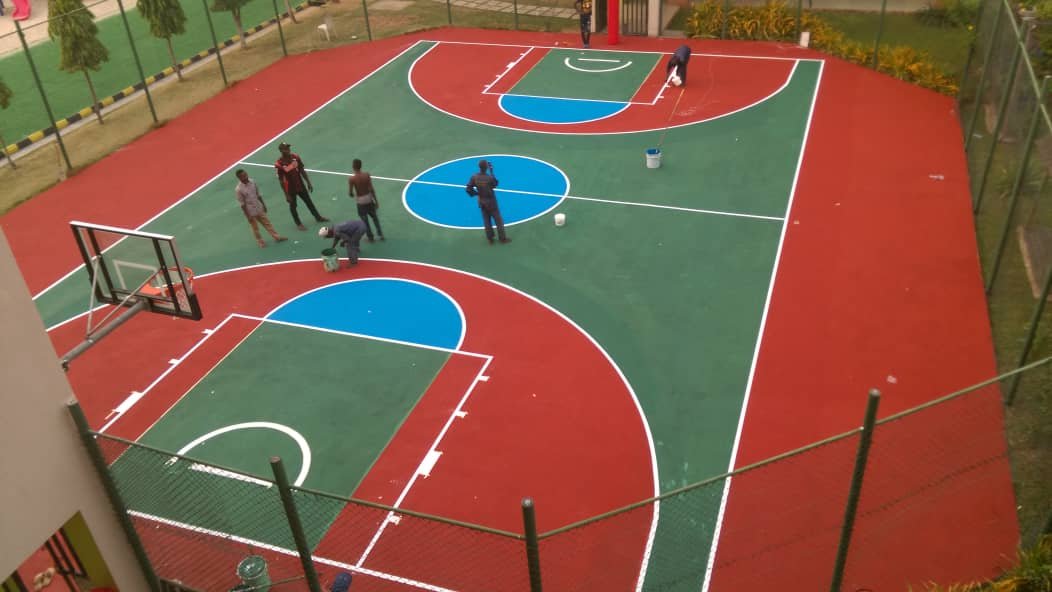
Meadow Hall School, Lagos Mini Basketball Court
Meadow Hall School, Lagos Mini Basketball Court: A Model for Modern School Sports Infrastructure
Introduction
The development of sports infrastructure in schools across Nigeria is becoming a major focus in modern education planning. Schools are increasingly recognizing that sports facilities are not just recreational spaces, but essential tools for student development, discipline, health, and talent discovery.
One standout example of this growing trend is the mini basketball court model used in premium private schools like Meadow Hall School, Lagos. Designed for space efficiency, safety, and multi-purpose use, mini courts are now a preferred solution for urban schools with limited land but high student engagement needs.
This article explores the concept, design, benefits, and estimated cost of a mini basketball court suitable for schools like Meadow Hall and similar institutions.
What Is a Mini Basketball Court?
A mini basketball court is a scaled-down version of a full-size basketball court, designed specifically for:
- Schools
- Youth training programs
- Residential estates
- Recreational centers
Typical Dimensions
Unlike the standard 28m × 15m court, a mini basketball court may measure:
- Half court: 14m × 15m
- Training court: 12m × 10m
- Primary school court: 10m × 8m (flexible design)
The goal is to provide a functional playing space without requiring large land areas.
Why Schools Like Meadow Hall Invest in Mini Basketball Courts
Premium schools in Lagos are increasingly integrating sports facilities into their campus design. Mini basketball courts offer several strategic benefits:
1. Space Optimization
Urban schools often face limited land availability. Mini courts allow schools to:
- Maximize available space
- Combine multiple sports in one area
- Preserve land for academic buildings
2. Student Physical Development
Basketball supports:
- Cardiovascular fitness
- Coordination and agility
- Teamwork and discipline
A dedicated court encourages regular physical activity among students.
3. Talent Development
Many Nigerian basketball talents begin in school environments. A well-designed court helps:
- Identify young athletes early
- Support structured training
- Prepare students for inter-school competitions
4. School Branding and Prestige
Modern sports facilities enhance a school’s reputation. A well-built basketball court signals:
- Quality education
- Holistic student development
- Premium infrastructure standards
Design Features of a Mini Basketball Court
A professional school basketball court—like those found in institutions such as Meadow Hall—typically includes the following features:
1. Surface Type
Most school courts use:
- Acrylic sports flooring (preferred)
- Anti-slip coating
- UV-resistant paint
This ensures durability under Nigeria’s weather conditions.
2. Base Construction
A strong foundation includes:
- Compacted laterite or hardcore base
- Reinforced concrete slab
- Proper leveling for ball bounce consistency
3. Basketball Equipment
Standard installations include:
- Steel hoop systems
- Polycarbonate or tempered glass backboards
- Adjustable height poles (for younger students)
4. Safety Features
Safety is a key priority in school environments:
- Padded pole guards
- Rounded edges on equipment
- Non-slip flooring
- Clear boundary markings
5. Perimeter Fencing
Mini courts are often enclosed with:
- Chain-link fencing or steel mesh
- Height: 2.5m – 4m
- Secure access gate
This prevents balls from leaving the playing area and improves safety.
6. Lighting System
For extended use, especially in extracurricular activities:
- LED floodlights
- Energy-efficient design
- Even light distribution
Lighting allows evening training sessions and school events.
Maintenance Requirements
To maintain quality and safety, schools must implement regular maintenance:
Weekly
- Cleaning debris and dust
- Visual inspection of surface
Monthly
- Equipment tightening and inspection
- Cleaning fencing and lighting
Annually
- Surface repainting (if needed)
- Structural inspection
- Minor resurfacing or repairs
Proper maintenance can extend court lifespan to 10–15 years or more.
Educational and Institutional Benefits
Mini basketball courts are not just sports facilities—they are educational tools.
They support:
- Physical Education (PE) curriculum
- School sports competitions
- Inter-house sports events
- After-school training programs
- Mental and emotional development
Students learn:
- Discipline
- Leadership
- Team collaboration
- Competitive spirit
Why Mini Courts Are Ideal for Urban Lagos Schools
Lagos presents unique challenges:
- High land cost
- Limited campus space
- High student population density
- Demand for modern facilities
Mini basketball courts solve these challenges by offering:
- Compact design
- High usability
- Low maintenance compared to large fields
- Flexible multi-use potential (basketball, volleyball, PE drills)
Future Trend: Multi-Sport School Courts
Many modern schools are now upgrading to:
- Basketball + volleyball combo courts
- Multi-purpose acrylic courts
- Smart courts with digital scoring systems
This trend reflects the future of school sports infrastructure in Nigeria.
Conclusion
The mini basketball court model seen in premium schools like Meadow Hall School, Lagos represents a modern approach to educational sports infrastructure. It combines efficiency, safety, durability, and student development in a compact design suited for urban environments.
As Nigeria’s education sector continues to evolve, mini basketball courts will remain a key feature of modern school design—bridging the gap between academics and athletics while nurturing the next generation of talent.