

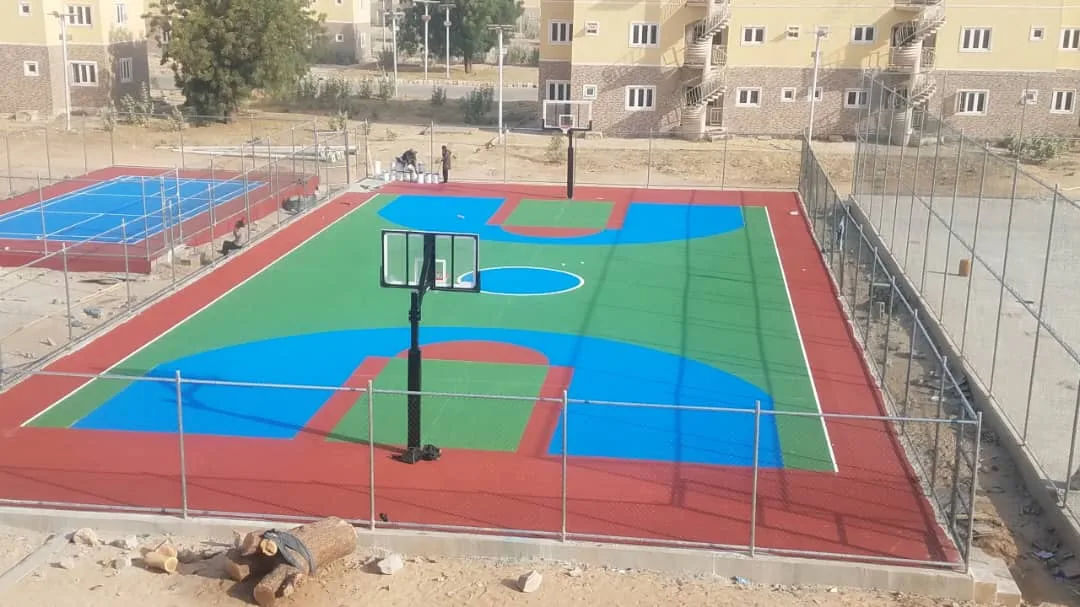
The Growing Demand for Community Basketball Courts in Nigeria
The Growing Demand for Community Basketball Courts in Nigeria
Basketball in Nigeria is experiencing a strong surge in popularity, driven by youth engagement, school sports development, urban recreation trends, and the global influence of the NBA. As cities become more densely populated and young people seek accessible recreational spaces, community basketball courts are emerging as one of the most in-demand sports infrastructure investments across the country.
From Lagos to Abuja, Port Harcourt to Ibadan, developers, schools, real estate investors, and local governments are increasingly recognizing basketball courts as low-cost, high-impact sports facilities that promote health, community engagement, and youth development.
This article explores why demand is rising, what is driving the trend, and why community basketball courts are becoming a key part of Nigeria’s sports infrastructure future.
Basketball Is Becoming a Mainstream Sport in Nigeria
Traditionally, football dominated Nigeria’s sports culture. However, basketball has steadily grown into one of the country’s fastest-rising sports.
Several factors have contributed to this shift:
- Increased exposure to the NBA and international competitions
- Nigerian players succeeding globally
- Social media and digital sports content
- School and university sports programs
- Youth interest in alternative sports
Nigeria has produced globally recognized athletes such as Giannis Antetokounmpo (via heritage connection) and Hakeem Olajuwon, who have helped inspire a new generation of players across the country.
This visibility has made basketball more aspirational and culturally relevant among young Nigerians.
Urbanization Is Driving Demand for Small-Space Sports Facilities
One of the biggest drivers of community basketball court demand is rapid urbanization.
Cities like Lagos are experiencing:
- High population density
- Limited available land
- Increasing housing developments
- Reduced open recreational spaces
Because basketball courts require relatively small land footprints compared to football fields, they are becoming ideal solutions for urban communities.
A standard half-court or full community court can be built in:
- School compounds
- Residential estates
- Community centers
- Church and mosque grounds
- Recreational parks
This makes basketball one of the most land-efficient sports infrastructure investments.
Schools Are Leading the Demand Surge
Educational institutions are among the biggest adopters of basketball courts in Nigeria.
Schools are investing in basketball infrastructure because it helps:
- Improve student engagement
- Enhance sports curriculum
- Attract parents and students
- Promote discipline and teamwork
- Support inter-school competitions
A well-designed basketball court also increases a school’s prestige and competitiveness in the education market.
Many private schools now include basketball courts as a standard facility requirement, alongside football pitches and multipurpose halls.
Real Estate Developers Are Adding Value Through Sports Facilities
Modern real estate developments increasingly include sports infrastructure as part of lifestyle amenities.
Basketball courts are particularly attractive because they:
- Require minimal space
- Are cost-effective to build
- Add visual appeal to estates
- Increase property value
- Promote community interaction
Developers are now integrating courts into:
- Luxury estates
- Mixed-use developments
- Student housing projects
- Gated communities
A simple half-court can significantly increase a property’s marketability and long-term value.
Youth Engagement and Crime Reduction Initiatives
Community basketball courts are also being used as tools for social development.
In many urban neighborhoods, sports infrastructure helps:
- Reduce youth involvement in crime
- Encourage positive engagement
- Provide structured recreational activity
- Build discipline and teamwork skills
Basketball courts often become informal gathering points where young people can train, compete, and socialize in a structured environment.
Local governments and NGOs are increasingly viewing sports infrastructure as a form of community investment and social intervention.
Low Construction Cost Compared to Other Sports Facilities
Another major reason for growing demand is cost efficiency.
Compared to football pitches or stadiums, basketball courts are relatively affordable.
A basic outdoor basketball court typically requires:
- Concrete or asphalt base
- Acrylic or PU sports flooring
- Hoops and backboards
- Fencing (optional)
- Lighting (optional for night use)
This makes basketball courts an attractive entry-level sports infrastructure project for:
- Schools
- Private investors
- Communities
- Small real estate developers
Because of lower costs, investors can achieve faster returns through rentals, training programs, or school usage fees.
Rise of Multi-Sport and Hybrid Facilities
Another important trend is the shift toward multi-purpose sports spaces.
Many developers now combine basketball courts with:
- Volleyball courts
- Mini football pitches
- Tennis courts
- Fitness zones
This maximizes land use and increases revenue potential.
Basketball courts are especially suitable for multi-use environments because:
- They are easy to convert
- Markings can be shared
- Surfaces are durable
- They support multiple training programs
This flexibility is driving increased adoption across Nigeria.
Influence of Global Basketball Culture
The global popularity of basketball is also shaping demand in Nigeria.
NBA influence has led to:
- Increased youth participation
- Street basketball culture growth
- Rise of basketball academies
- Social media-driven sports trends
Young Nigerians are increasingly inspired by international stars and highlight culture, which encourages participation in the sport.
This cultural influence is pushing demand beyond schools into neighborhoods and private recreational spaces.
Community Courts as Revenue-Generating Assets
Basketball courts are no longer just recreational spaces—they are becoming income-generating assets.
Facility owners can earn revenue through:
Hourly Rentals
- Evening games
- Weekend tournaments
- Training sessions
Coaching Programs
- Youth basketball academies
- Skill development camps
- Private coaching sessions
Events and Leagues
- Community tournaments
- Corporate competitions
- School leagues
Sponsorship Opportunities
- Court branding
- Local business sponsorships
- Sports branding partnerships
With proper management, a single basketball court can generate consistent monthly income.
Demand from Local Governments and NGOs
Public sector interest in sports infrastructure is also increasing.
Local governments and NGOs are investing in basketball courts to:
- Promote youth development
- Improve public health
- Strengthen community engagement
- Reduce social unrest
Basketball courts are often included in urban renewal projects and community development programs due to their affordability and high impact.
Design Trends in Modern Basketball Courts
Modern basketball court construction in Nigeria is evolving.
Popular trends include:
Acrylic Sports Flooring
- Durable
- Weather-resistant
- Vibrant colors
LED Sports Lighting
- Energy-efficient
- Enables night usage
Perimeter Fencing
- Safety and security
- Controlled access
Branding and Graphics
- School logos
- Estate branding
- Sponsorship designs
Seating and Shade Structures
- Improved spectator experience
- Community event support
These upgrades are making courts more professional and commercially viable.
Challenges Affecting Basketball Court Development
Despite rising demand, several challenges remain:
- Limited funding in public sector projects
- Poor maintenance culture in some communities
- Inconsistent construction standards
- Land availability in dense urban areas
- Lack of trained facility managers
Addressing these challenges is essential for sustainable growth.
The Future of Basketball Courts in Nigeria
The future looks promising for basketball infrastructure in Nigeria.
Key expectations include:
- More estate-based courts
- Increased school adoption
- Growth of basketball academies
- Expansion of community sports hubs
- Rise of indoor basketball facilities
- Integration with fitness and lifestyle centers
As urban populations grow and sports participation increases, basketball courts will become a standard feature in modern Nigerian communities.
Conclusion
The growing demand for community basketball courts in Nigeria is driven by a combination of urbanization, youth engagement, school development, real estate investment, and global sports influence.
Basketball courts offer a unique combination of benefits:
- Affordable construction costs
- High community impact
- Revenue generation potential
- Space efficiency
- Youth development opportunities
For investors, schools, developers, and government agencies, basketball courts represent one of the most practical and scalable sports infrastructure investments available today.
As Nigeria continues to evolve socially and economically, community basketball courts will play an increasingly important role in shaping healthier, more active, and more connected communities.